
Signs you need this
- • A full renovation where every wall and ceiling in a unit needs to come down to the studs before anything new goes up.
- • Old lath-and-plaster walls that are beyond patching and need to come out ahead of new insulation and drywall.
- • A tenant buildout or mill-conversion floor with dated partitions that need to be cleared before the new layout is framed.
- • Damaged or outdated board in a basement or attic finish that needs to be cleared, not patched, before new construction.
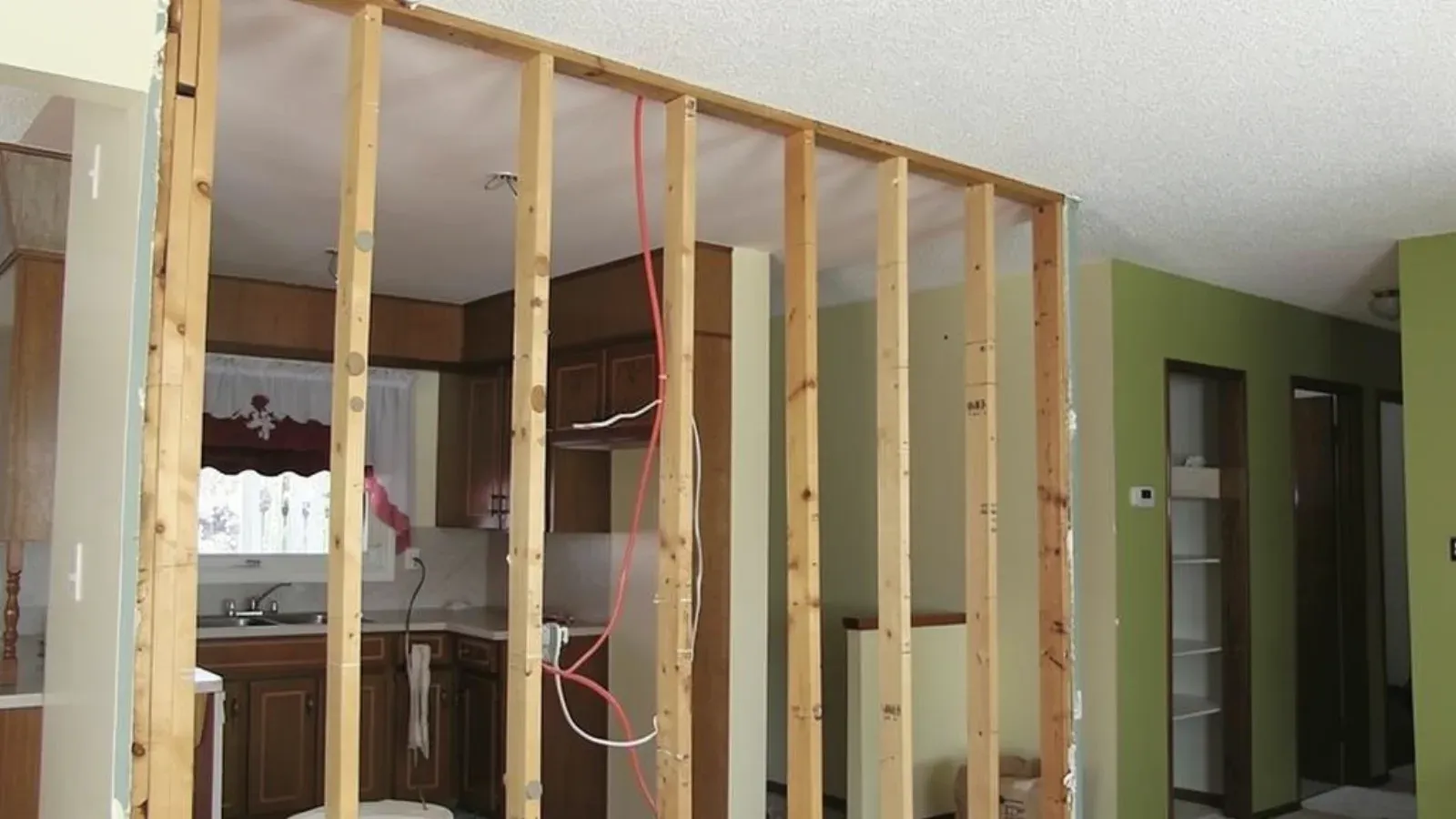
Providence Premier Drywall tears out drywall, sheetrock, and lath-and-plaster ahead of a renovation. We contain dust, protect the parts of the structure that are staying, and haul away the debris so the space is clean and ready for the next trade, whether that’s framing, insulation, or new board.
Tear-out is prep work, and prep work sets up everything after it
Demolition doesn’t get the attention finish work does, but a sloppy tear-out costs a renovation more time than almost any other stage. Dust that spreads past the work area means extra cleaning for every trade that follows. Debris left in the way slows the framing crew down before they’ve made a cut. Providence Premier Drywall treats removal as the first real milestone of a renovation, not a throwaway step before the interesting work starts: contain it properly, clear it completely, and hand off a space that’s actually ready for what comes next.
Drywall versus lath-and-plaster: two different demo jobs
Pulling drywall off studs is fast, comparatively light work. Pulling lath-and-plaster is a different job entirely. The plaster itself is heavy, the lath strips underneath generate their own volume of debris, and a plaster ceiling can drop a surprising amount of weight all at once if it’s not taken down in a controlled way. College Hill and East Side homes built before 1940 are full of this system, and a homeowner planning a gut renovation there should expect the demo phase to take longer and produce more debris than the same square footage of drywall would. We scope these jobs differently from the start, because bidding plaster removal like drywall removal is how projects end up behind schedule.
Containment: protecting the rest of the building while you demo
Most demolition in Providence doesn’t happen in an empty building. It happens in one unit of an occupied triple-decker, one floor of a mill conversion still under construction around it, or a hospital wing that has to stay operational next door. We build containment to match that reality: poly barriers sealing off the work area, negative air pulling dust inward rather than letting it drift into hallways or adjacent units, and floor and trim protection anywhere that’s staying. On projects near a fire-rated shaft or demising wall, we keep that assembly intact and protected rather than treating it as part of the demo scope.
Commercial and mill-conversion demo
Providence’s stock of former textile and jewelry mills in Olneyville and the Valley, along with downtown office towers moving toward residential or mixed use, has kept adaptive-reuse demolition steady work in this city. That side of the business runs differently from a residential gut reno: we scope against architectural drawings rather than a walkthrough, coordinate directly with the GC’s schedule so demo doesn’t become the bottleneck, and carry the general liability and bonding commercial developers expect from a sub on a larger project. Whether it’s a single triple-decker unit or a full mill floor, the standard is the same: know what’s coming out, protect what’s staying, and leave the space genuinely ready for the next trade.
Materials & standards
Products & materials we use
- Poly containment sheeting
- Negative-air equipment
Standards & codes we work to
- EPA RRP (pre-1978 lead-safe)
- ICRA containment
- IBC 707/708/709/713 fire barriers and shafts
- OSHA 10/30
- Asbestos testing
What the terms mean
- Lath and plaster
- Plaster keys
- Dust containment
- Negative air
- Demising and shaft wall
- Tenant improvement
- Adaptive reuse
Options & variants
| Option | When it applies | Cost |
|---|---|---|
| Selective demo (single room or wall) | Targeted renovation | Lowest scope |
| Full-unit gut tear-out (all walls and ceilings to studs) | Whole-unit renovation | Larger scope |
| Lath-and-plaster removal | Pre-1940 stock, includes plaster and lath disposal | Moderate to large, more labor and debris than drywall |
| Commercial partition demo | Tenant buildout or mill conversion | Scoped to drawings, coordinated with GC schedule |
What affects cost
- • Drywall versus lath-and-plaster, since plaster is heavier, slower to remove, and generates far more debris volume.
- • Whether asbestos testing is needed first, which applies to popcorn texture or plaster in buildings old enough to warrant it.
- • Total square footage and number of rooms or floors involved.
- • Access, including whether the building is occupied, elevator-only access in a mid-rise, and how much dust containment that requires.
- • Debris disposal logistics, dumpster placement, and hauling distance.
- • Whether fire-rated assemblies or shafts nearby need to stay intact and be protected during the work.
What to expect
- 1
Tell us the scope and timeline
You tell us the renovation scope and timeline, so we know what's coming out and by when.
- 2
Look at the space or drawings
We look at the space, or work from drawings for a commercial job, and confirm what's drywall and what's lath-and-plaster.
- 3
Test for asbestos
We test where the building's age calls for it, before anything is disturbed.
- 4
Set up containment
We set up poly barriers and negative air where needed, and protect floors, trim, and anything staying in place.
- 5
Tear out
We tear out the specified walls and ceilings, keeping any fire-rated assemblies or shafts we're not touching intact.
- 6
Haul debris
We bag and haul the debris, leaving the space swept and ready for the next trade.
- 7
Walk-through
We walk the space with you or your GC to confirm it's ready for framing or new board.
When this isn’t the right call
- If it's a small hole or a handful of damaged spots, not a full tear-out, drywall repair and patching is the better fit.
- If the plaster just needs stabilizing or converting, not full removal, plaster repair and conversion is the better fit.
- If the priority is drying out an active leak, not tearing out for a renovation, water damage drywall repair is the better fit.
- If the space has a mold problem and remediation is the goal, mold drywall replacement is the better fit.
Frequently asked questions
Do you test for asbestos before removing old plaster? +
Yes, on any building old enough to warrant it. We test before disturbing plaster, lath, or popcorn texture, not after, so the work stays compliant from the start.
Can you demo just one room, or does it have to be the whole unit? +
Either. Selective demo on a single room or wall is common for a targeted renovation, and full-unit tear-out fits a whole-unit gut.
How do you keep dust from spreading in an occupied building? +
We set up poly containment barriers and negative air where the scope calls for it, and seal off the work area from the rest of the building so other units or floors stay livable during the demo.
What happens to the debris? Do you haul it away? +
Yes, bagging and hauling debris is part of the scope, and we leave the space swept and ready for the next trade rather than leaving that for the GC.
Can you coordinate demo timing with my GC's schedule? +
Yes, that's the normal way this work happens. We sequence tear-out against the framing, insulation, and finish crews so the project doesn't stall waiting on us.
Do you work on commercial and mill-conversion projects, not just homes? +
Yes. We scope commercial partition demo against drawings and work with facilities managers and developers on tenant improvement and adaptive-reuse projects around the city, alongside residential gut renovations.