
About 10 mi / ~15 min south of downtown Providence. same-week scheduling for planned work; priority response for active water intrusion or a sagging ceiling near the shoreline villages.
Rhode Island’s second city, built for expansion
Warwick is the state’s second-largest city, and most of it grew up postwar as sprawling suburban single-family neighborhoods, subdivisions around Cowesett, streets radiating out from Apponaug’s civic center, and the mixed residential-commercial belt near Hillsgrove and T.F. Green Airport. That is a drywall-built city, not a plaster one, so the everyday work here looks different from the older neighborhoods closer to Providence: basement finishing as families add square footage without building out, new hanging for additions and remodels, and the patch-and-paint repairs any large, dense city accumulates. Warwick’s scale is what defines the work. There is always a basement being finished somewhere between Cowesett and the airport.
Where the Bay changes the job
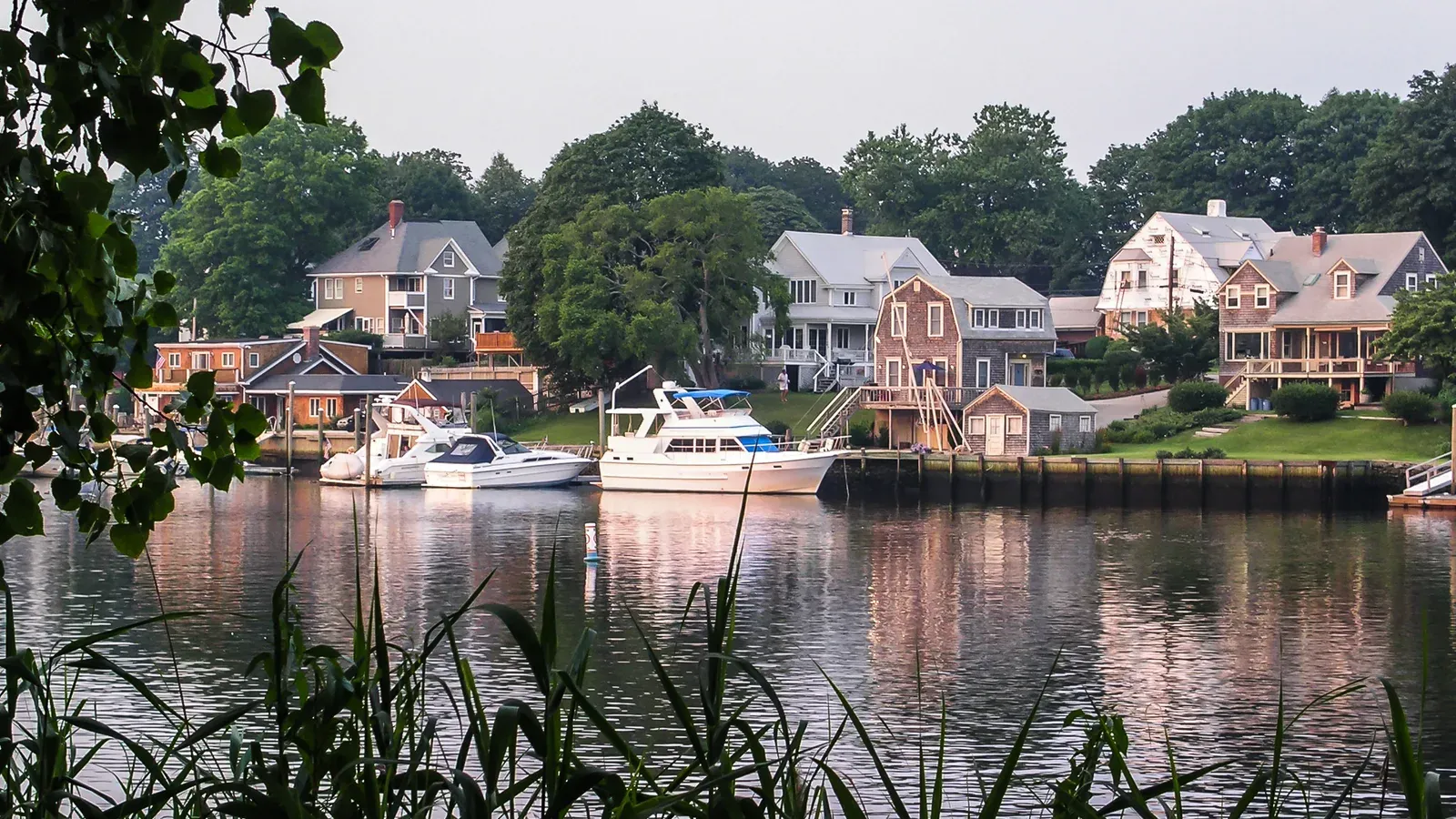
Warwick’s shoreline is the other half of the story. Conimicut and Oakland Beach sit directly on Narragansett Bay and Greenwich Bay, older villages of cottages and former summer homes that were converted to year-round living decades ago. That combination of age and coastal exposure means these two neighborhoods see more water-stained ceilings, soft drywall, and mold behind baseboards than the inland subdivisions do, which is why moisture-resistant board goes in and the cavity gets checked before a wall closes back up out there. Pawtuxet Village, the historic waterfront neighborhood Warwick shares with Cranston along the Pawtuxet River, carries the same coastal pattern on a smaller scale. None of that is unique to summer either. Rhode Island’s freeze-thaw winters and ice dams put stress on ceilings across the whole city, coastal and inland alike, so cracked seams and stained ceiling drywall are a normal post-winter call no matter which neighborhood.
One crew, a city-sized service area
Warwick’s size means the jobs vary block to block, a finished basement in a Cowesett ranch, a water-damaged ceiling in an Oakland Beach cottage, a patch job in a rental near the Bald Hill Rd corridor, but it is one local crew covering all of it, about fifteen minutes from downtown Providence. Planned work is scheduled within the week, with faster response for active water intrusion or a ceiling that is actively sagging, since that is a safety call regardless of which part of the city it is in. Whether the job is expanding a suburban home’s livable space or repairing what the Bay and the winter throw at a shoreline cottage, the standard is the same: drywall matched to the house it is going into, finished so it looks like it was always there.
Neighborhoods we work in
- Apponaug — Warwick's civic center and historic mill village, anchors City Hall and the downtown core.
- Conimicut — Bay-front residential village, older cottage-era homes along Conimicut Point exposed to coastal humidity.
- Oakland Beach — Shoreline neighborhood on Greenwich Bay, former summer cottages now year-round houses.
- Cowesett — Inland residential area of later single-family subdivisions, minimal water exposure.
- Hillsgrove — Area around T.F. Green Airport, mixed residential and commercial development.
- Pawtuxet Village — Historic waterfront village shared with Cranston, period homes along the Pawtuxet River.
Why Warwick homes need what they need
Warwick is Rhode Island's second-largest city, built out mostly as postwar and later suburban single-family subdivisions
Homeowners finish basements as the default way to add livable space
Inland areas like Cowesett keep adding rooms and remodeling drywall-built homes
Additions and remodels need fresh hanging and finishing, not plaster repair
Conimicut and Oakland Beach sit directly on Narragansett Bay and Greenwich Bay
Coastal humidity and storm exposure drive water-stained ceilings and soft drywall
Rhode Island's freeze-thaw winters and ice dams stress the whole city, coastal and inland alike
Ceiling seams crack and stain below roof valleys after winter
Warwick's size and density, from Hillsgrove's mixed residential-commercial mix to the Bald Hill Rd corridor, keep the housing stock in steady turnover
General wear, nail pops, and patch work stay constant citywide
What we’re called for most in Warwick
Local resources for Warwick homeowners
- Building Department, City of Warwick — Permits and inspections for wall and ceiling work run through the city Building Department.
- Tax Assessor / Property Records, City of Warwick — Housing-era and property data source.
- FEMA Flood Map Service Center — Relevant for the Conimicut and Oakland Beach shoreline along Narragansett Bay and Greenwich Bay.
Frequently asked questions
Do the shoreline villages like Conimicut and Oakland Beach need different drywall work than inland Warwick? +
Often, yes. Homes on Narragansett Bay and Greenwich Bay see more water-stained ceilings and walls from coastal humidity and storms, so moisture-resistant board is the go-to there. Inland neighborhoods like Cowesett see more basement finishing and addition work on standard drywall.
We're finishing our basement in a Cowesett subdivision home. Is that a common job here? +
Yes, it is one of the most common calls in Warwick. Most of the city's housing is postwar or later suburban single-family, built in drywall from the start, so a finished basement is the default way families add space without an addition.