
Signs you need this
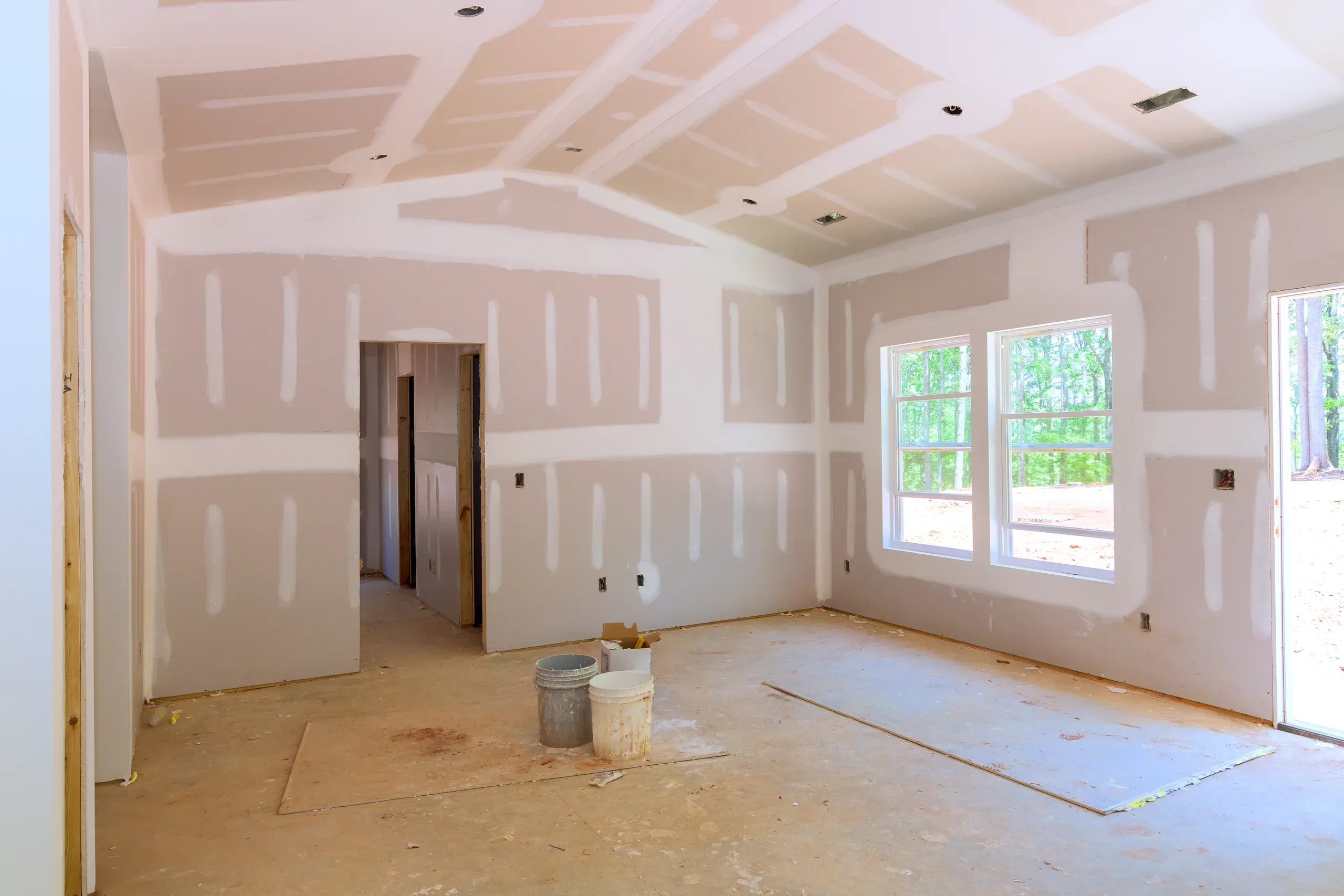
- • Board is already screwed to the studs, walls look "done" to an untrained eye, but every seam is still visible and every screw head still shows.
- • A landlord or property manager turning over a Federal Hill or West End triple-decker unit whose framer or handyman hung the board and stopped there.
- • A homeowner who hung their own board over a weekend and realizes the finish work is a different skill entirely.
Providence Premier Drywall takes board that is already hung and brings it to a smooth, paint-ready wall: taping every seam, embedding it in joint compound, applying corner bead at outside corners, and building up coats until the surface reads flat under normal room light. This is finish-only work; we are not framing or hanging board on this service, we are picking up wherever the last crew left off and finishing it right.
Picking up where the hanger stopped
Board on the wall is not a finished room, and the gap between the two is entirely in the taping and finishing. Providence Premier Drywall works this stage on its own, walking in after a framer, a GC’s hanging crew, or a homeowner’s weekend project has left board up but unfinished. The first thing we check is not the mud, it is the hang underneath: screw spacing, gaps between sheets, and whether fastener heads are seated properly. A rushed hang with uneven gaps forces more compound and more coats to hide, and catching that before the first coat of mud goes on saves rework later. Every seam gets taped, embedded in joint compound, and built up in successive coats that widen and feather each pass so the seam disappears into the surrounding wall instead of leaving a visible ridge.
Why turnover units in the West End and Federal Hill run on this service specifically
Landlords and property managers working triple-decker turnovers in the West End, Elmwood, and Federal Hill rarely need a full hang. The board from the last renovation or the last tenant’s damage repair is usually still up; what breaks down between tenants is the finish, patched holes that were never properly taped, or a paint job going over unfinished seams. We treat this as its own trade rather than a leftover task after hanging, because a turnover schedule does not have room for a crew that treats finishing as an afterthought. Getting seams flat, corners crisp with corner bead, and the surface primed and ready cuts directly into how fast a unit gets back on the market.
Level 4 as the working standard, and when it is not enough
Most rooms in Providence’s housing stock are finished to Level 4: smooth under ordinary lighting, ready for flat or eggshell paint, and durable for everyday use. That standard holds for the overwhelming majority of bedrooms, living rooms, and rental units. What changes the calculation is light. A wall lit head-on by a large west-facing window, or a room with strong sconce lighting raking across the surface, will show every imperfection a Level 4 finish would otherwise hide. We flag those walls specifically rather than upselling a higher finish across an entire job that does not need it; Level 5 work belongs to a different service and a different kind of room, and most Providence homes never need it.
The difference between hiding a seam and finishing one
A visible seam under paint almost always traces back to one shortcut: too few coats, not enough feathering width, or tape embedded without enough compound underneath it to hold. We run two to three coats depending on the joint, widening the taping knife with each pass so the transition from the raised seam to the flat wall happens gradually over eight to twelve inches rather than abruptly over two. Corner bead gets the same attention on outside corners, since a poorly finished corner bead is one of the fastest ways a wall reads as amateur work even when the flat seams look fine. Sanded, primed, and checked under a raking light before we call it done, the wall a painter picks up from us should need nothing more than color.
Materials & standards
Products & materials we use
- FibaTape (mesh tape)
- USG joint compound lines
- National Gypsum joint compound lines
- Hot mud and pre-mixed compound
Standards & codes we work to
- ASTM C840
- GA-214 finish Levels 0-5 (Level 4 default)
What the terms mean
- Mud and tape
- Seam taping
- Corner bead
- Joint compound
- Hot mud versus pre-mixed
- Paper tape versus mesh tape
- Knockdown texture
- Orange-peel texture
- Feathering
Options & variants
| Option | When it applies | Cost |
|---|---|---|
| Single-room finish (post-DIY hang) | Homeowner hung board, needs mud and tape only | Lowest scope |
| Full-unit turnover finish | Landlord/PM turning over a triple-decker unit | Moderate, multiple rooms and tighter turnaround |
| Whole-house finish behind a framer | GC or builder subbed the hang, needs finish crew | Larger scope, greater square footage |
What affects cost
- • Total linear footage of seams and number of inside/outside corners to tape and bead.
- • Quality of the hang underneath: poorly spaced fasteners or uneven board gaps take more mud and more coats to disappear.
- • Finish level required, with Level 4 as the default for most rooms.
- • Whether an existing texture, like a light knockdown, needs to be matched on patched or new sections.
- • Turnaround timeline, since a tenant move-in date sometimes compresses drying time between coats.
What to expect
- 1
Call and describe the space
You call once board is hung and describe the space, how many rooms, whether it is a turnover unit, a DIY hang, or a GC's framing job.
- 2
Walk the hung board
We walk the hung board, check screw spacing and joint gaps, and flag anything that needs correcting before mud goes on.
- 3
Tape every seam
We tape every seam with paper or mesh tape embedded in joint compound and run corner bead on outside corners.
- 4
Build up coats
We build up two to three coats, widening and feathering each pass, sanding lightly between coats.
- 5
Sand, prime, and match texture
We sand the final coat smooth, prime the walls, and match any existing texture the room calls for.
- 6
Clean up and walk-through
We clean up dust and debris and walk the finished walls with you before paint starts.
When this isn’t the right call
- If the walls still need to be hung and there is no board up yet, drywall installation and hanging is the starting point.
- If you want a dead-flat, Level 5 finish for raking light or a formal room, skim coat and Level 5 finish goes beyond standard Level 4.
- If the walls are original lath-and-plaster, not drywall, plaster repair and plaster-to-drywall conversion is the right service.
- If the seams are cracking or failing on old, already-finished walls, drywall repair and patching covers that.
Frequently asked questions
Do you hang drywall too, or only tape and finish? +
This service is finish-only, picking up once board is already hung. If you also need the board hung, that is a separate service and we can quote both together.
I hung my own board and the seams look bad even after I tried mudding them. Can you fix it? +
Usually, yes. We assess whether the existing tape and mud can be built on or needs to come off and start over. Bubbled or loose tape typically has to be removed; solid tape with a rough finish can often be built up and smoothed from where it is.
What is a Level 4 finish and is it enough? +
Level 4 is the standard paint-ready finish, smooth under normal room lighting with flat paint. It is the right default for most rooms. Rooms with strong raking light from large windows sometimes benefit from a higher finish, which we can discuss separately.
How fast can you turn over a triple-decker unit between tenants? +
It depends on room count and drying time between coats, but we plan turnover jobs around your move-in date and can compress the schedule when the timeline is tight.
Do you use paper tape or mesh tape? +
We choose based on the joint: paper tape for a stronger bed on flat seams, mesh where it suits the repair or patch. Both are finished to the same smooth standard.
Can you match the texture in the rest of the unit? +
Yes, if adjoining rooms carry a knockdown or orange-peel texture, we match it on the new work so the finished room does not stand out from the rest of the unit.